
The Company of the Sisters of Saint Ursula of Sion
Founded in Sion in 1884, it traces its line back, through Brig and Fribourg, to Anne de Xainctonge — Dole, 1606.
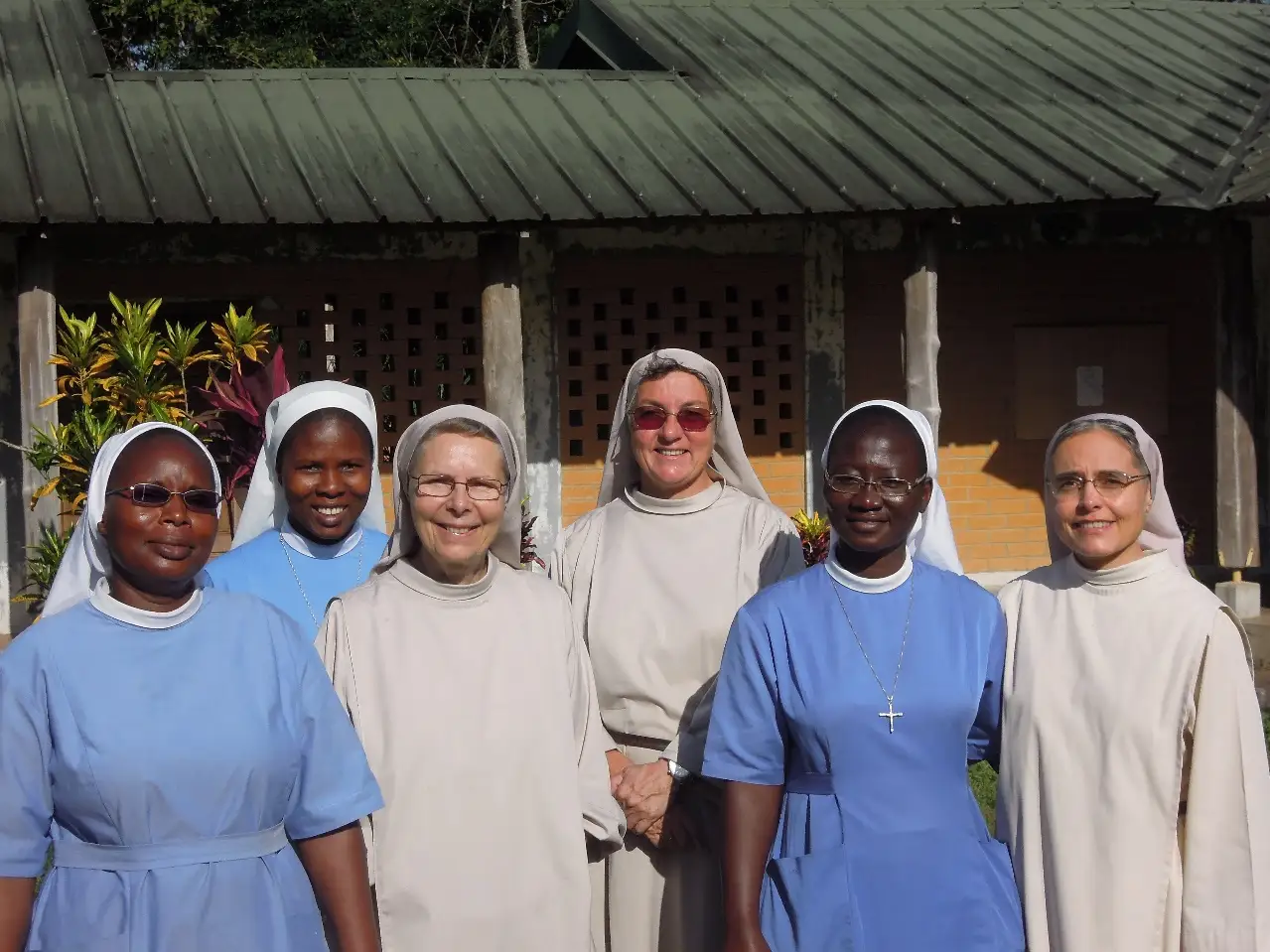
Sixty sisters. Eighteen in Switzerland, thirty-seven in Côte d’Ivoire, five in Forest Guinea.
Four novices, sixteen in temporary vows, forty in perpetual vows.
The Mother House in Sion, and small parish communities: Bramois, Hérémence, Montana-Village, Platta.
Bouaké, Yamoussoukro, Siably, Facobly, Daloa, Divo, Attoban.
The community of Sérédou, in Forest Guinea.
Where we come from
Anne de Xainctonge was born in Dijon in 1567, into a family of the city’s Parlement. The family home stood next to the college where the Jesuits settled in 1581. Seeing the boys go in, she thought of the girls.
On 29 November 1596 she left for Dole, today in the Jura. She was twenty-nine. She would wait ten years for her work to be approved: the Company of Saint Ursula opened in Dole on 16 June 1606.
Against the spirit of the age, she wanted a company of women without enclosure: refusing it was, for her, a sine qua non. The Company opened public schools for girls, and teaching there was free.
Anne de Xainctonge died in Dole in 1621. From Dole, the line runs through Fribourg, then Brig. Around 1860, in Sion, the Ursulines of Brig were called on to educate the children of the girls’ orphanage; in 1884 they let Sion become an independent house. The Company of the Sisters of Saint Ursula of Sion was born.
The thread runs on today. In Bouaké, in Côte d’Ivoire, the Sainte-Ursule boarding school for girls welcomes pupils intent on preparing for their future. In Sérédou, in Guinea, young people learn a trade at the Complexe Sainte-Ursule and women grow in independence.
“The sisters, as Anne de Xainctonge wished, will not carry great torches that cast a brilliant light in the Church, but they will carry small lamps that will light the way for young girls, servants, the poor and women, to make God known and adored through his divine Son, Our Lord.”
From Dole to Sérédou
- 1606
Dole — Anne de Xainctonge
The foundation from which, through Fribourg and then Brig, descend the seven Houses united in a federation since 1965.
- c. 1860
Sion — the girls’ orphanage
Mgr Blatter, dean of the cathedral Chapter, calls on the Ursulines of Brig to take charge of the children’s education.
- 1884
The Company of Sion is founded
The sisters of Brig let Sion become an independent house. The Company of the Sisters of Saint Ursula of Sion is born.
- 1912
The girls’ teacher training college
The State of Valais entrusts the Ursulines with building and running the college, under a formal agreement.
- 1953
Guinea — the call to mission
Answering the call of Pius XII, the sisters leave for Guinea: schools, dispensaries, the advancement of women. They will be expelled in 1967.
- 1969
Côte d’Ivoire — six pioneers
In August, six sisters board a ship in Marseille, bound for Abidjan. They settle at once in Siably, near Man; Bouaké follows in 1970.
- 1980
Daughters of the country
Ivorian women ask to become Ursulines — then Guineans and, in recent years, young women from Liberia, Burkina Faso and Togo.
- 2016
Sérédou — the return to Guinea
Decided at the general chapter of 2012, the return comes forty-nine years after the expulsion: three sisters open a community in the parish of Sérédou, diocese of N’Zérékoré.
- 2026
Ten years of presence in Sérédou
The jubilee is celebrated in Sérédou, from 23 to 25 October.
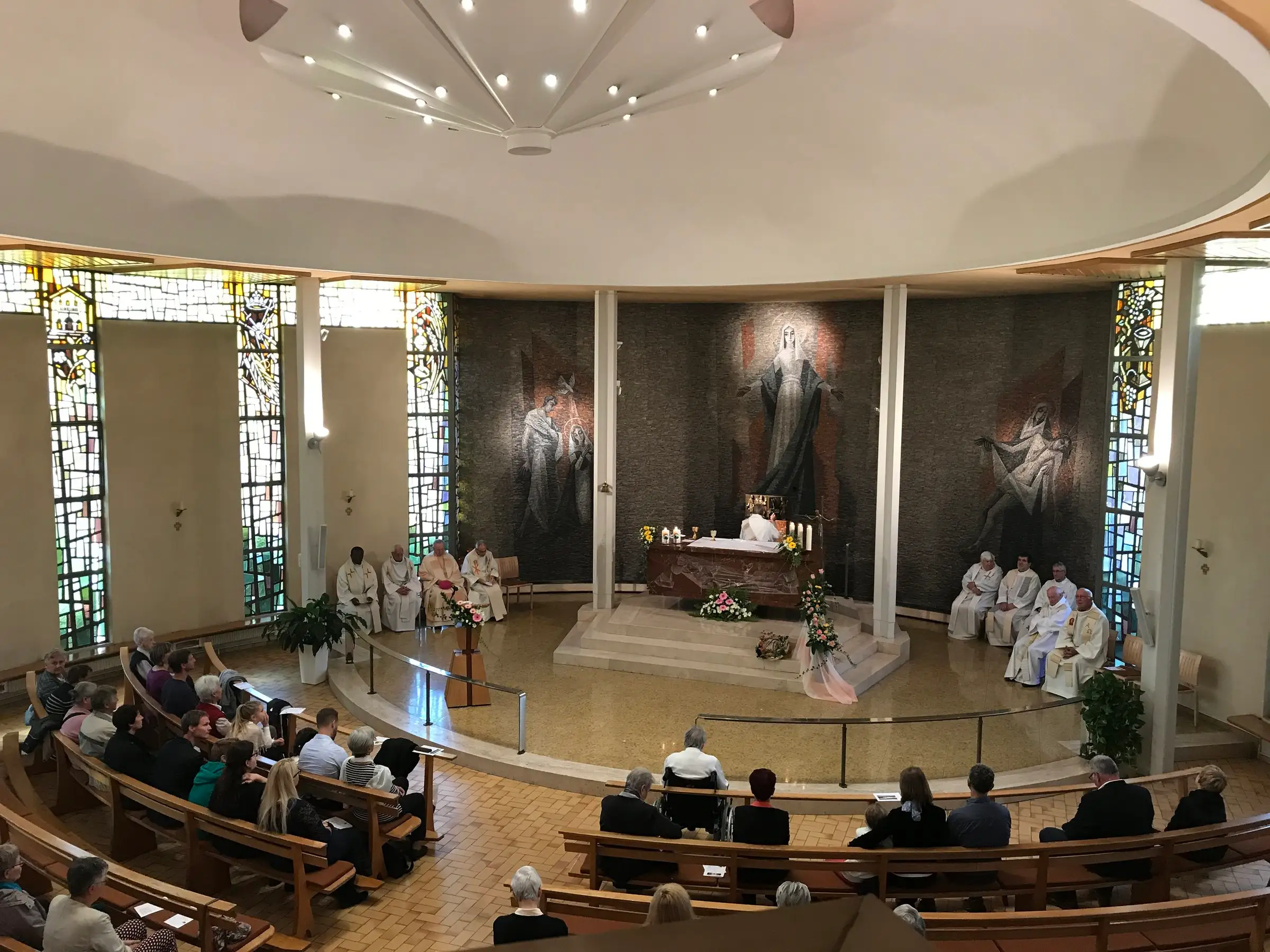
The Mother House
The place of their roots. The older sisters received their first formation here; the African sisters come to discover where their religious life began; those whom age or illness limits find care and company here.
- The Marian chapel, open for adoration and quiet prayer
- Rooms for days of reflection and preparation for the sacraments
- The distribution of hosts, made at the monastery of Collombey
The sisters who have left us
Twenty-eight notices, kept up by the community. The memory of those who carried the mission before us. They are written in French.